615-355-5822

Thinking about straighter teeth but not sure where to start? Many patients in Smyrna ask: Is your smile a right fit for Invisalign (And When It’s Not) Smyrna? It is a great question — and the honest answer is that Invisalign works beautifully for many people, but not for everyone. Understanding candidacy helps you make a confident, informed decision about your care.
At Smith Dental, Dr. Robert L. Smith takes a thorough, educational approach to every consultation. He evaluates your bite, alignment, and dental health before recommending any treatment. This article walks you through exactly what Invisalign can fix, what it cannot, and what alternatives exist when clear aligners are not the right path.
What Invisalign Can Treat — Common Cases in Smyrna
Invisalign uses a series of clear, removable trays to gradually shift your teeth. It has improved dramatically over the years. Today it handles a wide range of alignment issues with impressive results.
Here are the most common conditions Invisalign addresses well:
- Mild to moderate crowding — teeth that overlap or sit too close together
- Spacing issues — gaps between teeth caused by missing teeth or natural spacing
- Mild overbite — upper front teeth that extend too far over the lower teeth
- Mild underbite — lower teeth sitting in front of upper teeth
- Crossbite — upper and lower teeth biting on the wrong side of each other
- Open bite — upper and lower teeth that do not meet when you close your mouth
These cases represent the majority of orthodontic concerns. If your issues fall into the mild-to-moderate range, Invisalign is likely a strong candidate for your care. Dr. Smith will take digital scans and X-rays to assess severity before confirming your eligibility.
When Invisalign May Not Be the Right Fit
Invisalign is powerful, but it does have limitations. Certain conditions require more precise, continuous force than clear aligners can deliver. Understanding these limits protects you from choosing a treatment that will not fully resolve your problem.
Invisalign may not be the best option when:
- You have severe crowding where teeth are rotated more than 20 degrees
- Your bite issues are skeletal rather than just dental — involving jaw structure
- You need significant vertical tooth movement, which aligners struggle to achieve
- You have bridgework or certain restorations that prevent normal aligner attachment
- You are a child or young teen whose teeth are still actively erupting
- You have severe overbite or underbite that requires jaw correction
In these situations, traditional braces or a combination approach may deliver better outcomes. This is not a failure — it is simply using the right tool for the right job. Dr. Smith will always explain why one treatment serves you better than another.
Is Your Smile a Right Fit for Invisalign? What the Consultation Reveals
The only definitive way to know if Is Your Smile a Right Fit for Invisalign (And When It’s Not) Smyrna applies to you is through a professional exam. A visual look alone cannot tell the full story. X-rays, bite analysis, and digital scans together reveal the complete picture.
During your Invisalign consultation at Smith Dental, Dr. Smith evaluates several key factors:
Bone density and gum health — Healthy gums are essential. Active gum disease must be treated before orthodontic work begins. Teeth cannot move safely through inflamed or damaged bone.
Root position and length — Short roots or roots at unusual angles affect how teeth respond to movement. This influences both the plan and the timeline.
Bite relationship — How your upper and lower jaws relate to each other determines whether Invisalign alone can correct the issue or whether additional treatment is needed.
This consultation is also a great time to explore Cosmetic Dentistry Smyrna options like veneers or teeth whitening that can complement your new smile after alignment is complete.
How Invisalign Compares to Traditional Braces
Many Smyrna patients choose Invisalign for its discreet appearance and removable convenience. These are real advantages. However, traditional braces offer their own strengths that matter in certain clinical situations.
Advantages of Invisalign:
- Nearly invisible while worn
- Removable for eating and brushing
- Fewer emergency visits for broken wires
- Generally more comfortable day-to-day
- No food restrictions
When traditional braces perform better:
- Complex rotations requiring precise bracket control
- Intrusion and extrusion movements that need stronger anchoring
- Cases where patient compliance with wearing aligners is a concern
- Severe malocclusions involving jaw position
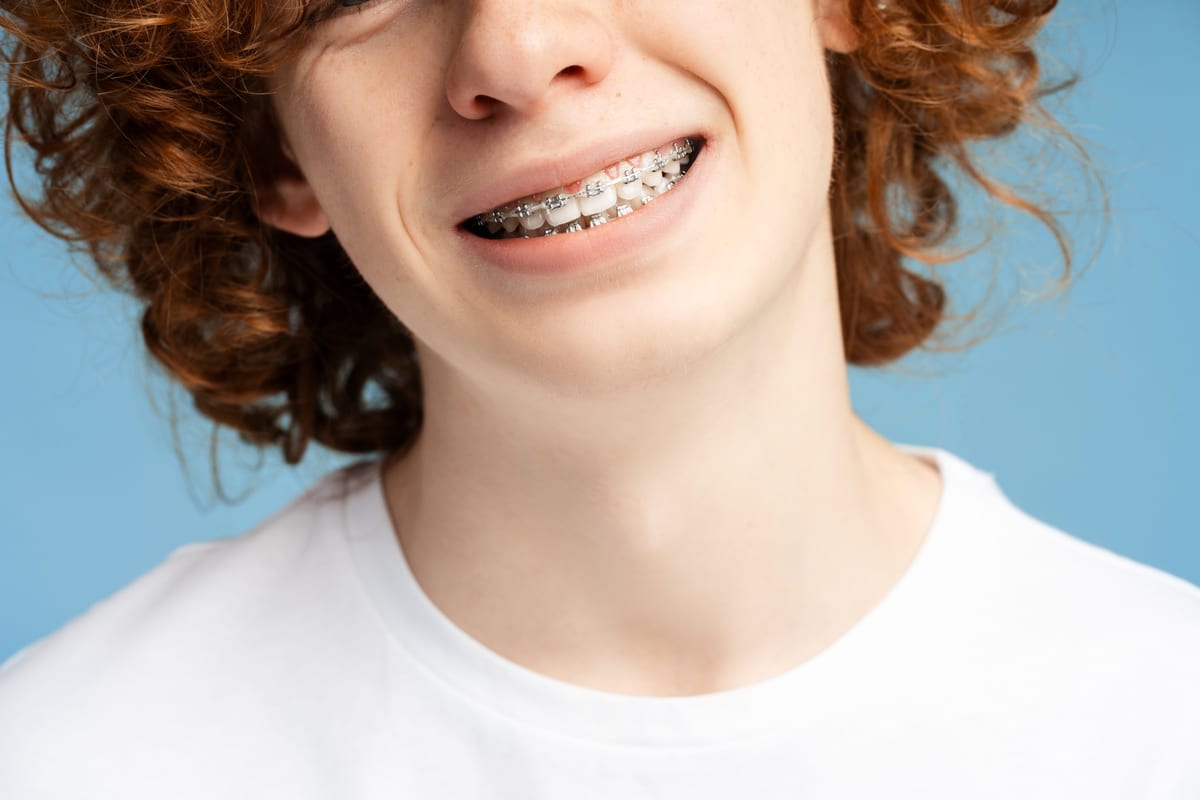
Braces stay on your teeth continuously. They apply force 24 hours a day without depending on you to wear them correctly. For complex cases, that constant pressure delivers results that aligners simply cannot match. Dr. Smith will discuss which approach — or combination — gives you the best outcome.
Supporting Your Smile Before and After Treatment
Whether you choose Invisalign or braces, your overall oral health plays a major role in success. Teeth move more predictably when gums are healthy and bone is strong. Starting treatment in good oral health also prevents complications mid-treatment.
Dr. Smith often recommends addressing any underlying dental issues before beginning orthodontic work. This might include a professional cleaning, cavity treatment, or a gum health check. If dental anxiety has kept you from getting care, ask about Sedation Dentistry Smyrna options that make every visit comfortable and stress-free.
After your alignment treatment is complete, maintaining your results matters just as much. Retainers protect your investment. Regular cleanings and checkups keep your smile healthy for the long term. Dr. Smith and the team at Smith Dental will guide you through every stage of the process.
Conclusion: Find Out If Invisalign Is Right for You in Smyrna
Invisalign is one of the most effective orthodontic tools available today. But like any treatment, it works best when matched to the right patient. Understanding candidacy — what it can fix, what it cannot, and when braces serve you better — helps you choose wisely and get the smile you want.
At Smith Dental in Smyrna, TN, Dr. Robert L. Smith provides honest, thorough consultations tailored to your unique bite and goals. You deserve clear answers, not guesswork. Book Now to schedule your appointment with our team.
Frequently Asked Questions
How do I know if I am a candidate for Invisalign in Smyrna?
The best way to determine candidacy is through an in-person consultation with Dr. Robert L. Smith at Smith Dental. He will take digital scans, review your bite, and assess your gum and bone health. Mild to moderate crowding, spacing, and bite issues are typically treatable with Invisalign. Severe or skeletal problems may require traditional braces or a combination approach.
Can Invisalign fix a severe overbite or underbite?
Invisalign can address mild to moderate overbites and underbites effectively. However, severe cases — especially those involving the jaw structure rather than just tooth position — often require traditional braces or even surgical intervention. Dr. Smith will evaluate the severity of your bite issue and recommend the most effective solution for your specific situation.
What happens if my teeth are too crowded for Invisalign?
If crowding is too severe for clear aligners to manage safely, traditional braces are typically recommended. In some cases, a combination approach may be used — starting with braces and finishing with Invisalign refinements. Dr. Smith will explain your options clearly during your consultation so you understand the path forward.
Is Invisalign suitable for teenagers in Smyrna?
Invisalign offers a Teen version designed for younger patients whose teeth may still be developing. However, not every teenager is an ideal candidate. Compliance is a key factor since aligners must be worn 20 to 22 hours per day to be effective. Dr. Smith evaluates each young patient individually to determine whether Invisalign or braces will deliver the best result.
How long does Invisalign treatment take at Smith Dental?
Treatment length varies depending on the complexity of your case. Mild alignment issues may resolve in as little as six months. More complex cases can take 18 months or longer. During your consultation, Dr. Smith will provide a personalized timeline based on your digital scans and treatment goals.